

Key Takeaways
- Karon Beach welcomes gentle family swimming through the calm season from November to April, when the water stays warm and shallow near the shore.
- The beach flag system is the daily guide, and a red-and-yellow flag marks the lifeguard-supervised swimming zone.
- The red flag meaning is a full pause on swimming for everyone, a signal to move water play to the pool.
- During the monsoon months from May to October, rip currents form along the open bay, so families follow the flags and keep children close.
- When caught in a rip current, staying calm, floating, and moving parallel to shore is the advice water-safety authorities give.
Table of Contents
- A Quick Family Swimming Guide to Karon Beach
- Understanding Phuket's Beach Flag System
- Seasonal Water Conditions at Karon Beach
- Safe Swimming and Supervision for Children
- Family Pool Days at a Karon Beach Family Resort
- Planning a Safe Family Beach Holiday in Phuket
- Frequently Asked Questions About Karon Beach Safety (FAQs)
Planning a family holiday in Phuket brings plenty of excitement, and for parents travelling with young children, time in the sea is often the heart of the trip. A question many parents ask before they pack is a simple one, so here is the short answer: for much of the year, Karon Beach is safe for swimming with children, with the season, the daily flags, and steady supervision shaping when families head into the water. Karon offers a long sweep of golden sand along an open bay, where conditions shift with the seasons, so a little local knowledge goes a long way.
This family swimming guide walks through the beach flag system, the calm swimming months, easy steps for children, and relaxed pool days at a Karon beach family resort beside the sand.
A Quick Family Swimming Guide to Karon Beach
For families who want the essentials first, here is the quick version. The season sets the tone, and the flags on the sand point to the right choice on any given day.
- Calm season (November to April): Gentle, shallow water near the shore makes this the easy time for paddling and swimming with children.
- Monsoon season (May to October): The sea builds bigger surf and rip currents form along the open bay, so the flags shape each day's plan.
- Red-and-yellow flags: Head into the water here, inside the lifeguard-supervised zone.
- Solid red flag: The sea is closed for the day, so pool time takes over.
Understanding Phuket's Beach Flag System
Every patrolled beach in Phuket, Karon included, uses a coloured flag system that lifeguards update through the day. Thailand's Department of Disease Control sets the standard the lifeguards follow, so the flags carry the same meaning along the island's west coast. Reading them takes a moment and gives parents a clear signal before anyone steps into the water.
Red Flags and Red-and-Yellow Flags Explained
The Karon Beach red flag meaning is straightforward. A single solid red flag means the water stays closed to swimmers that day, usually because strong currents or large surf are running. A red flag holds even when the sea looks calm from the sand, since lifeguards read what is happening below the surface. A red-and-yellow flag marks the designated swimming zone under lifeguard watch, and this is where families keep together in the water. A yellow flag calls for extra care with children close to shore, and a green flag shows gentle conditions for swimming within the marked area.
Lifeguard Patrols Along Karon Beach
Karon is one of Phuket's lifeguarded beaches, with patrols on duty through the daytime, generally from around 8am to 6pm. Families swim within the marked zone and check in with a lifeguard about the day's conditions on arrival. Once the guards finish for the day, swimming moves to the resort pool, where the water stays calm and easy to supervise.
Seasonal Water Conditions at Karon Beach
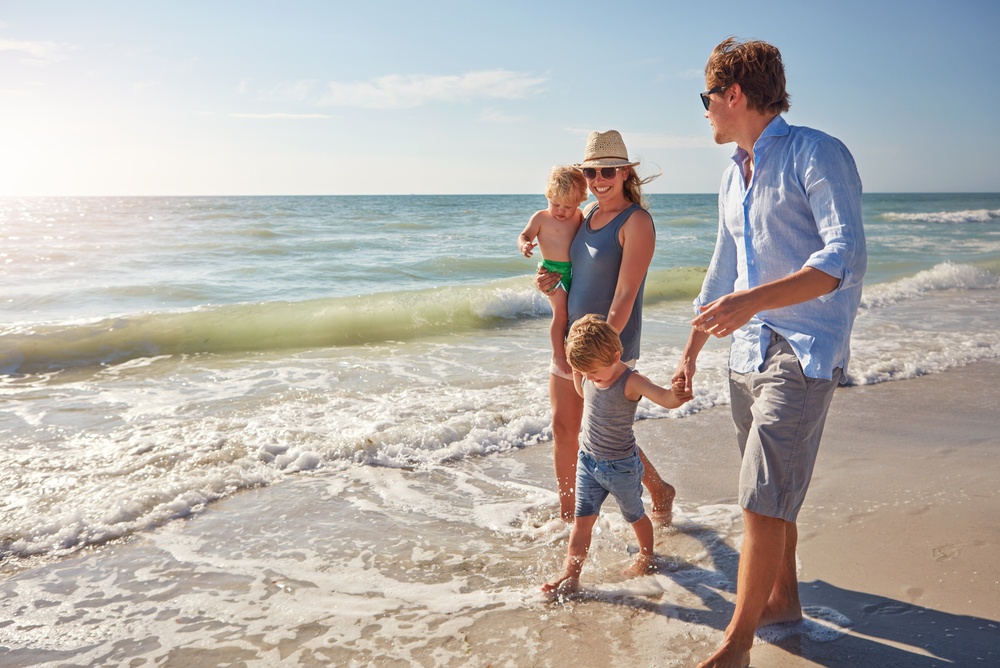
Calm Season From November to April
From November to April, Karon Beach settles into its calm spell. The sea flattens, the shallows stay easy underfoot for small children, and mornings bring soft light and settled water for a family paddle before the midday sun. This part of the year is the relaxed window for beach days by the sand.
Monsoon Season From May to October
The southwest monsoon runs from May to October, when the Andaman sends bigger surf onto the west coast and rip currents on Phuket beaches become more common, Karon included. Families still enjoy plenty of time by the water, walking the sand, building sandcastles, and paddling at the edge under close watch, while swimming in the sea follows the flags each day.
Spotting a Rip Current
A rip current shows itself as a narrow channel of water moving away from the beach. Parents can look for a calm-looking gap between breaking waves, a streak of churning or discoloured water, or foam and debris drifting steadily out to sea. Pointing these signs out to children turns spotting into a simple family habit before each swim.
Safe Swimming and Supervision for Children
Phuket beach safety for children rests on steady habits more than on any single rule. A short routine before each swim, matched to a child's age and confidence in the water, keeps the whole family relaxed at the beach.
Close Supervision for Young Children
Karon's seabed can dip a short way from shore, so young children and non-swimmers stay within an adult's arm's reach at all times. Keeping toddlers in the shallows, close enough to touch, is the simplest way to keep beach time relaxed and happy for everyone.
Teaching Older Children About Rip Currents
Older children who swim well benefit from a few calm rules to remember. Water-safety authorities advise anyone caught in a rip current to stay calm and float, since a rip pulls a swimmer away from shore rather than under. From there, a strong swimmer moves along the shoreline, parallel to the beach, until free of the pull, then heads back in at an angle with the breaking waves. Raising one arm and calling for help brings the lifeguard quickly.
Sun Care and Marine Awareness
A family beach day goes smoothly with sun cover, shade breaks, and plenty of water to stay hydrated in the tropical warmth. During the monsoon months, jellyfish can drift closer to shore at times, so families read any posted notices and ask the lifeguard about marine conditions. A quick word with the patrol on arrival keeps everyone informed and at ease.
Family Pool Days at a Karon Beach Family Resort
When the sea takes a rest day, a water-focused stay keeps the holiday flowing, and this is where a Karon beach family resort earns its place. Centara Karon Resort Phuket stands beside Karon Beach, a newly renovated resort on the Andaman coast built with families in mind. The pools give children somewhere to splash and play whatever the sea is doing.
- Pools and waterslides: The resort has three outdoor pools, including the Tropicale, Terrace, and Lagoon pools, with waterslide adventures for children.
- Chang Dee Club and E Zone: Younger children and teenagers have the Chang Dee Club and E Zone for play and activities away from the water.
- Family accommodation: Family-friendly rooms include the 48-square-metre Deluxe Family Suite and a spacious two-bedroom suite that sleeps larger groups.
- Spa and dining: SPA Cenvaree and a choice of restaurants and bars round out an easy family stay by the sand.
Planning a Safe Family Beach Holiday in Phuket
Enjoying Karon Beach with children comes down to a few easy habits: read the flags each day, swim inside the lifeguard zone, stay close to young swimmers, and keep a water-ready base in mind for the days the sea is closed. With these in hand, a family holiday on Phuket's west coast stays relaxed from the first paddle to the last afternoon by the pool.
For a family stay beside the sand with pools, waterslides, and space for everyone, explore Centara Karon Resort Phuket and plan a beach holiday where the water play carries on, sunshine or showers.
References:
- Staying Safe at the Beach in Rainy Season. Retrieved 11 September 2026, from https://www.phuket.net/articles/2025/08/staying-safe-beach-rainy-season/
- Phuket Beach Safety: What Every Traveller Needs to Know Before Getting in the Water. Retrieved 11 September 2026, from https://www.thingtodophuket.com/post/phuket-beach-safety-what-every-traveller-needs-to-know-before-getting-in-the-water
- Phuket Beach and Swimming Safety Guide. Retrieved 11 September 2026, from https://phuketexpatguide.com/blog/phuket-beach-safety-swimming/
- Rip Current Survival Guide. Retrieved 11 September 2026, from https://oceantoday.noaa.gov/ripcurrentfeature/
Frequently Asked Questions About Karon Beach Safety (FAQs)
Q: Is it safe to swim at Karon Beach with children?
A: Yes. During the calm season from November to April, Karon Beach offers gentle, shallow water that is well suited to family swimming. Follow the daily flags, keep within the lifeguard-supervised zone, and stay close to young children. Through the monsoon months from May to October, follow the flags closely and enjoy the pool when the sea is closed.
Q: What do the red flags on Phuket beaches mean?
A: A single solid red flag means swimming is closed because of strong currents or large surf, and it holds even when the sea looks calm. A red-and-yellow flag marks the safe, lifeguard-supervised swimming zone. This is the red flag meaning families rely on across Phuket's west-coast beaches.
Q: When is the best time of year for family swimming at Karon Beach?
A: The calm season from November to April brings the gentlest, clearest water for children, with settled mornings that are ideal for a paddle close to shore.
Q: What should families do on a red-flag day at Karon Beach?
A: On a red-flag day, keep everyone out of the sea and enjoy the sand or head to the resort pools. A karon beach family resort with pools and waterslides keeps the pool days going while swimming in the sea is paused.
Q: How do I help my child out of a rip current?
A: Teach children to stay calm and float, since a rip current pulls away from shore rather than under. A strong swimmer moves along the beach, parallel to shore, until free of the pull, then heads back at an angle. Raising an arm and calling brings the lifeguard quickly.






Share-
-
-
URL copied to your clipboard