

Vientiane does not rush you. It is a capital where monks in saffron robes cross quiet streets at dawn, where the smell of fresh baguettes drifts from corner bakeries and where the evening’s biggest event is watching the sun sink into the Mekong. For a city of its stature, it feels wonderfully human in scale. That makes it perfect for exploring in a single, unhurried day.
Here is how to see the best of it, from golden stupas to riverside sunsets.
Morning: Pha That Luang, the golden heart of Laos
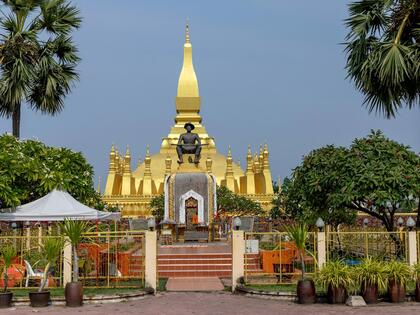
Start early, before the heat builds, at Pha That Luang. Rising in tiers of gold against the morning sky, this great stupa is the most important religious monument in Laos and a national symbol you will see on everything from banknotes to official seals.
The present structure dates from 1566, during the reign of King Setthathirath, though legend says a sacred site stood here long before. Walk slowly around the cloister walls and take in the scale of it: the lotus-petal base, the soaring central spire and the quiet reverence of locals who come to pray. Morning light is when it glows brightest and the grounds are calmest before the tour groups arrive.
Mid-morning: Patuxai, Vientiane’s victory gate
From That Luang, it’s a short ride down the broad avenue of Lane Xang to Patuxai. At first glance, it looks a little like Paris’s Arc de Triomphe. Look closer, though, and it’s unmistakably Lao.
Built between 1957 and 1968, Patuxai honours those who died in the struggle for independence. Its four arches are crowned with five ornate towers, and its surfaces are covered in Lao motifs. There are lotus forms, coiling naga serpents and graceful kinnari, the half-bird, half-woman figures of Buddhist and Hindu mythology. Stand beneath the arches and look up. The ceilings are painted with gods, goddesses and three-headed elephants.
Locals enjoy telling a cheeky story about the monument. Building materials, the tale goes, were meant for a new airport runway, earning Patuxai the nickname “the vertical runway.” It is more lore than documented history, but it is part of the monument’s charm.
Climb the stairs inside for one of the best views in the city. From the top, Lane Xang Avenue stretches towards the Presidential Palace and the low rooftops of Vientiane spread out in every direction. Allow around 45 minutes and bring water for the climb.
Lunch: a taste of Lao and French Vientiane
By now you will have earned a long lunch. Vientiane’s food scene reflects its layered history. Try a bowl of khao piak sen, a comforting noodle soup, or sit down to laap, the zesty minced meat salad that is the national dish, served with baskets of sticky rice. For something lighter, grab a khao jee pâté, a crusty baguette stuffed with pâté, cold cuts and fresh herbs. It’s a delicious legacy of the city’s French past.
Follow it with a Lao coffee. Grown on the Bolaven Plateau in the south, it is rich and strong, and often served sweet over ice. It is the perfect pick-me-up before the afternoon.
Afternoon: Wat Si Saket and Haw Phra Kaew
In the early afternoon, head to two of the city’s most historic temples. They face each other across Setthathirath Road, near the Presidential Palace.
Wat Si Saket, built in 1818 by King Chao Anouvong, is thought to be Vientiane’s oldest surviving temple. It was spared when Siamese armies sacked the city in 1828, and its weathered cloister walls are lined with hundreds of tiny niches. Each holds small Buddha images of wood, stone, silver and bronze. The effect is quietly mesmerising, especially in the soft afternoon light.
Across the road stands Haw Phra Kaew, once the royal temple of King Setthathirath and the original home of the Emerald Buddha, before it was taken to Bangkok. The current building is a 20th-century reconstruction, and today it serves as a museum. Its collection of Buddhist sculpture and its elegant gardens make for a peaceful stop.
Sunset: the Mekong riverfront
As the day cools, make your way to the Mekong. The riverfront promenade is where Vientiane comes alive in the evening. Joggers, families, couples and street vendors all gather to watch the sun set over Thailand on the opposite bank.
At Chao Anouvong Park, a statue of the king gazes across the water. As darkness falls, the riverside night market springs up nearby. Its rows of red-roofed stalls sell textiles, crafts, clothes and snacks. Wander through, then find a spot at one of the riverside eateries for grilled fish, a cold Beerlao and the glow of lights reflecting on the water.
Where to stay
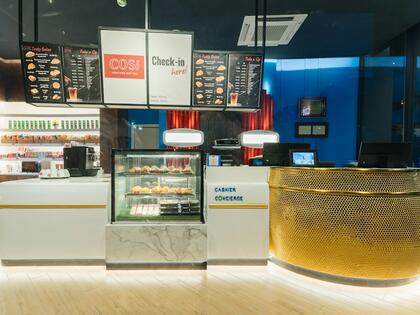
Vientiane is compact, and staying central means you can explore much of it on foot. COSI Vientiane Nam Phu puts you right in the thick of it, within walking distance of cafés, street food stalls, the night market and the riverfront. Patuxai and the city’s temples are just a short ride away.
It is an easy, social base for a day like this. Start with a coffee before heading out to That Luang. Drop back for a mid-afternoon cool-off in the rooftop pool. Then head out again as the riverfront lights up for the evening.
A capital at its own pace
Vientiane may be small, but it leaves a lasting impression. In a single day, you can stand beneath a golden stupa, climb a victory gate covered in mythical creatures, wander centuries-old temples and end the evening by the Mekong with a cold drink in hand. It is a city that invites you to slow down, look closer and take it all in. Do that, and you may find one day simply is not enough.
Share-
-
-
URL copied to your clipboard