

For most of the year, Pha That Luang stands in calm, golden stillness on the edge of Vientiane. Pilgrims come and go, and visitors circle its cloisters in quiet admiration. But once a year, under the full moon of the twelfth lunar month, the great stupa becomes the beating heart of the nation.
Thousands of people arrive from across Laos, and from Thailand, Cambodia and Vietnam beyond. They come dressed in their finest traditional silks, carrying flowers, candles and offerings. Monks gather in their hundreds. Music drifts through the night air. This is Boun That Luang, the That Luang Festival, the most important religious celebration in Laos and the city’s grandest occasion.
A stupa at the centre of a nation
To understand the festival, you first need to understand That Luang. The golden stupa is the most sacred monument in Laos and a symbol of the nation itself. Its present form dates from 1566, when King Setthathirath built it after moving his capital to Vientiane. Legend holds that it enshrines a relic of the Buddha.
Over the centuries, it has been damaged, rebuilt and restored. Through it all, it has remained a focus of Lao identity and faith. The festival honours both the stupa and the Buddhist traditions it represents. For many families, attending is a cherished ritual, passed down through generations.
Processions of light
The celebrations unfold over several days and many of their most beautiful moments come after dark.
In the days leading up to the full moon, candlelit processions wind through the city towards the stupa. Participants in traditional dress carry phasat, delicate structures of bamboo decorated with flowers, candles, incense and gold paper. Shaped like miniature temples, they are offered at That Luang as acts of merit. Seeing them carried by candlelight, glowing against the night sky, is one of the festival’s most moving sights.
On the final evening, under the full moon, crowds circle the stupa three times, carrying flowers, candles and incense. The soft flicker of thousands of flames, the murmur of prayers and the golden spire rising above it all create an atmosphere that is hard to put into words.
The dawn alms giving
The most sacred moment of the festival comes at dawn on the main day. Long before sunrise, devotees gather in the grounds of That Luang for Tak Bat, the giving of alms. Hundreds of monks file past slowly as people kneel to offer sticky rice, food and gifts.
It is an extraordinary thing to witness. The scale is vast, but the mood is gentle and reverent. Afterwards, families sit together and share festive dishes such as khao poun, a rice noodle soup, as the sun rises over the stupa.
To see it up close, arrive well before 6am.
Games, music and celebration
That Luang Festival is not only solemn. It’s also a joyful, lively celebration.
One of its most unusual traditions is tikhy, a traditional Lao game played with sticks and a ball, often compared to field hockey. Today it’s played as a ceremonial match, preceded by a procession that carries the ball from the stupa to the playing field. It’s a rare chance to see a tradition you won’t find anywhere else.
Around the stupa, the festival grounds fill with food stalls, markets and fairground rides. Handicrafts, flowers, local snacks and souvenirs are all on offer. In the evenings, concerts, cultural performances and fireworks keep the energy going late into the night.
Joining the festival respectfully
Visitors are warmly welcomed, and a little preparation helps you join in respectfully. Dress modestly, with shoulders and knees covered. Women entering temple areas are encouraged to wear a sinh, the traditional Lao skirt, and these can often be rented nearby. Remove shoes and hats in sacred spaces, keep your voice low during ceremonies, and take photos discreetly without interrupting rituals or blocking worshippers.
The festival is the busiest time of year in Vientiane, so plan ahead. Accommodation fills quickly, and transport near the stupa can be limited during the main events. Allow extra time to get around, especially for the dawn alms giving.
Where to stay
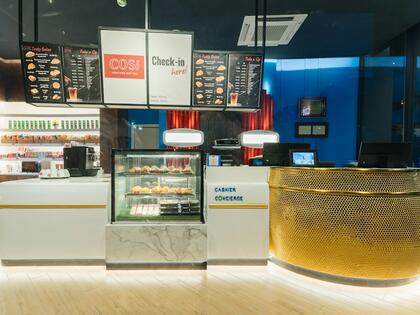
Staying in the heart of the city makes festival days much easier. COSI Vientiane Nam Phu sits right in the centre, within walking distance of cafés, street food stalls and the riverside night market. That Luang is a short ride away.
It’s a relaxed, social base for a busy few days. You can be up before dawn for the alms giving, then head back for a well-earned breakfast and rest. Cool off in the rooftop pool during the heat of the afternoon, then head out again as the candlelit processions begin.
A celebration that lights up the capital
There are many festivals across Southeast Asia, but few feel as personal or as deeply rooted as this one. That Luang Festival offers a rare window into the heart of Laos: its faith, its traditions and its quiet sense of national pride. Stand among the crowds under the full moon, with candlelight flickering across the golden stupa, and you’ll understand why so many return year after year.
Share-
-
-
URL copied to your clipboard