



In the heart of Nakhon Ratchasima, beside the old city gate, a bronze figure of a woman stands tall with a sword in hand. Flowers are heaped at her feet. Incense drifts through the air. At almost any hour, someone is quietly paying their respects. To the people of Korat, she is not simply a statue. She is Ya Mo, the city's grandmother, its protector and its proudest story.
Her name is Thao Suranari, and to understand Korat, you need to know who she was.
A city under threat
Thao Suranari was born Mo in 1771. She married into the city's leadership and became the wife of Korat's deputy governor, at a time when the city stood as an important Siamese stronghold on the edge of the northeast.
In 1826, that position was put to the test. King Anouvong of Vientiane launched a campaign against Siam, and while Korat's governor was away, his forces entered the city through a ruse. The people of Korat were taken captive and marched away from their homes.
The courage of Lady Mo
What happened next turned an ordinary woman into a legend. As the story is told, Lady Mo kept her nerve. During the march, she asked the captors for knives so the women could prepare food. Those blades were quietly passed to the imprisoned men. When the moment came, the captives rose up, overpowered their guards and broke free.
Different versions of the tale add their own colour. Some say the soldiers were plied with drink before the revolt began. Others describe Lady Mo leading the uprising herself. Like many great stories, history and legend have grown together over the years. What remains constant is the heart of it: a woman who refused to give up on her people, and a community that found its courage when it mattered most.
In recognition of her bravery, King Rama III granted her the title Thao Suranari, meaning "the brave lady." It is the name Korat has honoured ever since.
A monument at the city's heart
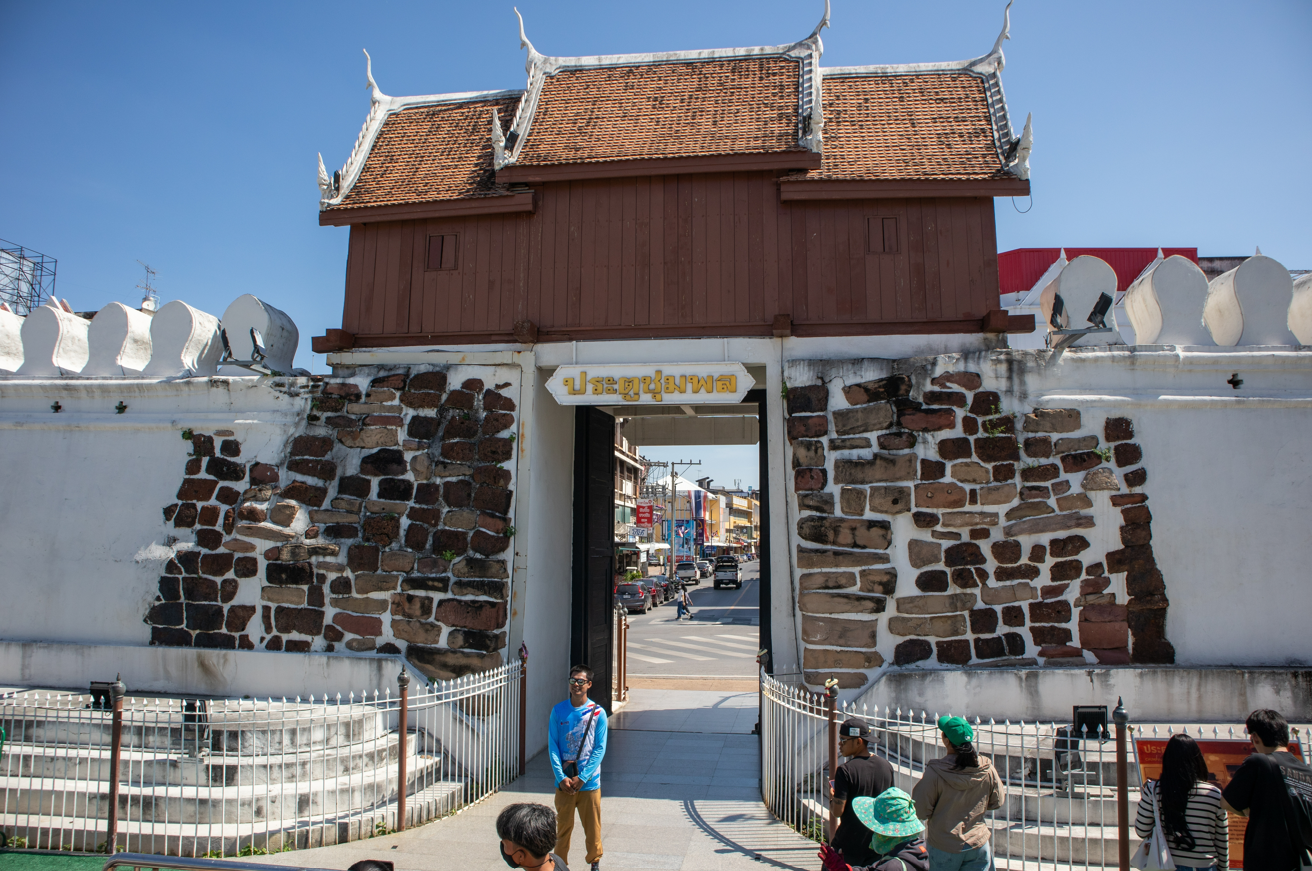
In 1934, a monument was unveiled beside Chumphon Gate, the western entrance to Korat's old city walls. Designed by Phra Thewaphinimmit and sculpted by Silpa Bhirasri, the renowned Italian-born artist often called the father of modern Thai art, the statue shows Thao Suranari standing proud in traditional dress, her sword resting at her side.
Nearly a century later, it remains the emotional centre of the city. Locals stop by before exams, job interviews and new business ventures. Garlands of marigolds and jasmine pile up throughout the day. Those whose wishes come true often return to give thanks, sometimes with performances of pleng Korat, the city's traditional folk song, sung in her honour at the foot of the monument.
For visitors, it is worth slowing down here. Watching the steady flow of people arriving with offerings gives a real sense of how deeply Thao Suranari is woven into everyday life in Korat.
When the whole city celebrates
Each year, from late March into early April, Korat comes together for the Thao Suranari Festival, marking her victory. The streets around the monument fill with processions, cultural performances, folk music and food stalls, as the city celebrates the woman it credits with its survival.
It is one of the liveliest times to visit. The festival also offers a rare chance to see Korat's traditions on full display, from costumes and music to the sheer warmth of local pride.
Visiting with respect
The monument is a sacred place for many, so a little care goes a long way. Dress modestly, move quietly around those making offerings and avoid standing in front of worshippers when taking photos. Early mornings and evenings tend to be calmer and the soft light around the old gate makes them lovely times to visit.
The monument sits right in the city centre, which makes it easy to fold into a day of exploring. Guests at Centara Hotel and Convention Centre Korat are just a short drive away, making it simple to visit early before the day warms up or to return in the evening when the square glows and the nearby markets come alive.
A story that still lives
Many cities have heroes in their history books. Few still bring them flowers every single day. In Korat, Thao Suranari is not a distant figure from the past. She is part of the city's identity, its sense of resilience and its quiet confidence. Stand at her feet for a few minutes, among the incense and the marigolds and you will understand why.

Share-
-
-
URL copied to your clipboard