

Muscat rewards business travellers who plan around its rhythm. The working week runs Sunday to Thursday. There is no metro, so taxis booked through licensed apps do most of the work. Plus the best meetings often happen over a long lunch or a late dinner.
This guide covers the practical side of a work trip to Oman's capital. How to get around, when to schedule meetings and where to eat when you have a client to impress or just an hour to spare.
Getting around Muscat
Muscat is a long, spread-out city. It stretches along the coast between the airport in Seeb and old Muscat and Mutrah in the east. Walking between meetings is rarely practical, so most visitors rely on taxis.
The first thing to do is download a taxi app before you land. Uber and Careem do not operate in Oman. Instead, taxis run through locally licensed apps. OTaxi and Oman Taxi are the most widely used in Muscat, with Tasleem, Marhaba and Hala also on the roads. Fares are fixed before the trip and the route is tracked, so there is no haggling.
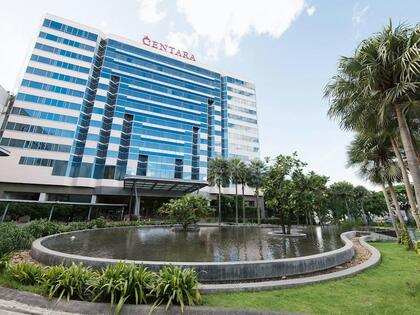
The same two apps, OTaxi and Oman Taxi, are licensed to collect passengers at Muscat International Airport. A ride into the city centre costs around OMR 9 to 10, though it is worth checking the app for the current fare. Many business travellers stay in the Al-Ghala and Ghala Heights area, about 15 minutes from the terminal. Centara Muscat Hotel Oman is based here, which makes for an easy first stop after a late arrival.
Timing matters on the road. Traffic builds between 7am and 9am and again from 4pm to 6pm, especially around Ruwi and Qurum. Leave extra time if your meetings are in those districts.
There are other ways to get around. Mwasalat runs the city's public buses, which are cheap but slower for a tight schedule. Car hire suits travellers with site visits outside the city, as roads are good and well signed. One small tip helps with any option: save your hotel's name and address in Arabic on your phone. It makes giving directions much easier.
Timings: when Muscat works
The weekend in Oman falls on Friday and Saturday. Sunday is a full working day. If your first meeting is on Sunday morning, aim to arrive on Saturday evening. Government offices and banks stay closed on Fridays, so avoid planning anything official that day.
Working hours start early. Government offices usually open at 7:30am or 8am and close around 2:30pm or 3pm, so morning slots are best for public sector meetings. Private companies often stay open later and some work a split shift to avoid the afternoon heat. During Ramadan, working days are shorter. The city slows during the day, then comes alive after iftar, the evening meal that breaks the fast.
Muscat runs on GMT+4 all year, with no daylight saving. It sits three hours behind Bangkok and two to four hours ahead of most of Europe, depending on the season. That makes morning calls to European offices easy to fit in.
The pace of business is also worth noting. Relationships matter here, and first meetings often begin with coffee and conversation before any talk of work. Allow time for this and avoid stacking meetings too tightly. Some public holidays follow the lunar calendar and move each year, so check the dates before you book, especially around Eid.
Where to eat
Muscat's dining scene is broader than many visitors expect. Omani cooking sits alongside excellent Indian, Lebanese and Turkish food, a legacy of the city's long trading history.
For a client dinner with a real sense of place, Bait Al Luban on the Mutrah Corniche is hard to beat. It is set in a restored old guesthouse facing the harbour and is known for shuwa, marinated meat slow-cooked for hours. Kargeen Caffe offers a more relaxed evening in a lantern-lit garden and it is one of the few places in the city still serving shuwa cooked the traditional way.
When time is short, Tea House in Al Khuwair is a good-value lunch between meetings, finished with Omani coffee and dates. Mumtaz Mahal in Qurum serves northern Indian food with views across the city from its hilltop setting. For a more formal occasion, such as closing a deal or hosting senior guests, Al Angham beside the Royal Opera House sets the right tone.
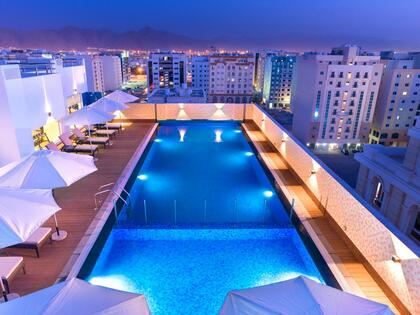
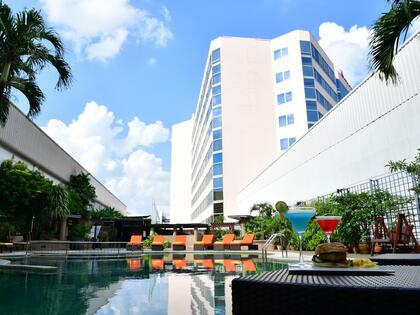
Not every meal needs a taxi ride, though. After a long day, many travellers prefer to eat close to where they stay. At Centara Muscat Hotel Oman, Tiptara serves international dishes with Thai favourites from breakfast to dinner. The Roof hosts barbeques and private events, and in-room dining runs around the clock, which helps when the last meeting ends late.
If you are hosting, book ahead. Popular spots like Kargeen fill up on weekend evenings, which in Muscat means Thursday and Friday nights.
Business etiquette in brief
A few simple courtesies go a long way. Dress smartly and modestly, with long trousers and covered shoulders suiting most settings. When greeting, wait for your host to offer a handshake, particularly across genders. Arabic is the official language, but English is widely spoken in business. When coffee and dates are offered, accept them. It is part of how meetings begin.
Making time for Muscat
Even a packed trip can fit in a short visit. The Sultan Qaboos Grand Mosque is around 2.5 km from Centara Muscat Hotel Oman, and an early morning visit takes about an hour. Muscat City Centre mall is also close by for last-minute shopping before a flight.
Share-
-
-
URL copied to your clipboard