

There are few places in the world where you can have breakfast in one country and lunch in another, with nothing more than a short drive and a river crossing in between. Udon Thani is one of them. Just an hour or so to the north, the Mekong River marks the border between Thailand and Laos. Spanning it is the Thai–Lao Friendship Bridge, the gateway to Vientiane, one of Asia's most charming and unhurried capitals.
For travelers in Udon, the crossing turns into a city to break into a two-country adventure. Here is how to make the journey.
The bridge that joined two nations
Opened in 1994, the Thai–Lao Friendship Bridge was the first bridge to cross the lower Mekong. It stretches just over a kilometer from Nong Khai on the Thai side to Tha Na Laeng on the Lao side and it has become a vital link between the two countries. Trade, families and travelers pass back and forth every day.
Crossing it is a small moment that feels larger than it is. Below, the wide brown Mekong rolls slowly past. Ahead lies in a different country, a different language and a different pace of life.
Getting from Udon to the border
There are several easy ways to reach Vientiane from Udon Thani.
The simplest for most travelers is the international bus. It departs from Udon's main bus terminal, close to Central Plaza in the city center, and runs several times a day. The bus handles the full journey: to the border, through both immigration checkpoints and across the bridge, finishing at the main bus station in central Vientiane. It is affordable and straightforward, and the whole trip usually takes around two to three hours, depending on the queue at the border.
Alternatively, you can travel to Nong Khai first by car, van or bus, about an hour's drive, then make your own way across. This gives you more flexibility and the chance to linger along the Nong Khai riverside before you go.
For something a little different, a short cross-border train runs from Nong Khai station over the bridge to Khamsavath station on the outskirts of Vientiane. It's a novel way to cross Mekong, though services are limited, so it is worth checking the timetable in advance.
Crossing the border
The border is open daily from early morning until late evening. If you are making your own way, the process is simple.
First, clear Thai immigration and get your exit stamp. Walking across the bridge is not permitted, so you will then board a shuttle bus that carries passengers to the Lao side. There, travelers who need a visa head to the visa on arrival office. You will need your passport, a passport photo and the fee, ideally in clean, undamaged US dollar notes, which usually works out cheaper than paying in baht. Once your visa is issued, collect your entry stamp and you are through.
A small overtime fee applies outside office hours, on weekends and on public holidays. Visa rules vary by nationality, and some travelers can enter visa-free or apply for an e-visa in advance. It is always worth checking the latest requirements before you travel.
From the Lao side of the bridge, taxis and shared vans make the short trip into central Vientiane in around half an hour.
Discovering Vientiane
Vientiane is a capital that never seems to be in a hurry. French colonial villas sit beside golden temples. Bakeries sell fresh baguettes on street corners. In the evening, locals gather along the Mekong promenade to watch the sun sink over Thailand on the opposite bank.
Begin at Pha That Luang, the gleaming golden stupa that is the national symbol of Laos. Then make your way to Patuxai, the city's monumental victory gate, and climb to the top for sweeping views across the city. Wat Si Saket, one of Vientiane's oldest temples, is home to thousands of small Buddha images tucked into its cloister walls. As evening falls, the riverside night market fills with stalls selling textiles, crafts and snacks, while restaurants nearby serve everything from laap and sticky rice to French-inspired fare.
Where to stay
Vientiane is compact and easy to explore, so staying in the center makes all the difference. COSI Vientiane Nam Phu puts you within walking distance of the city's cafés, street food, shops and night markets. Patuxai and Pha That Luang is a short ride away. It is a relaxed, social base and after a day of exploring, the rooftop pool is the perfect spot to cool off as the city lights come on.
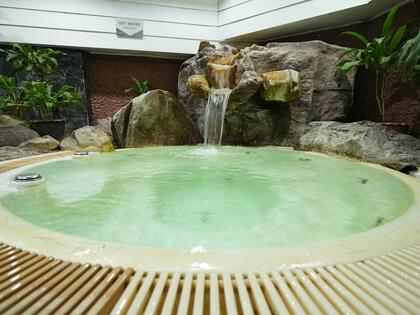
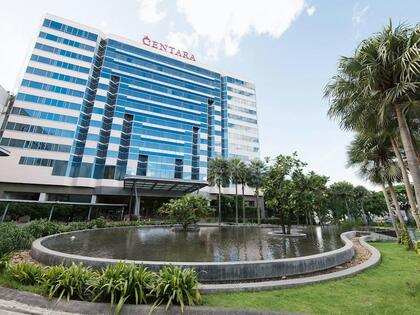
On the Thai side, Udon Thani makes a comfortable starting point for the journey. Centara Udon, just steps from Central Plaza and the city's main bus terminal, is ideally placed for an early start towards the border. It is also a welcoming place to return to, whether that is for a swim, a treatment at SPA Cenvaree, or simply a good night rest before heading home.
Two countries, one journey
The beauty of the crossing is how easy it makes it to see two sides of the Mekong on a single trip. Begin with Udon's markets, temples and ancient heritage. Then cross the river to Vientiane's golden stupas, French bakeries and riverside sunsets. A short bridge, a stamp in your passport, and suddenly the journey feels twice as rich.

Share-
-
-
URL copied to your clipboard