

In the summer of 1966, a young American student was walking along a dirt path in a quiet village in Udon Thani when he tripped over a tree root. He fell to the ground and found himself face to face with the rims of old clay pots poking out of the earth. They were unlike anything he had seen before, painted with bold swirling patterns in deep red.
That stumble would change how the world understood Southeast Asia’s past. The village was Ban Chiang. Beneath its homes and rice fields lay the traces of a community that had farmed, crafted and cast bronze thousands of years earlier.
A village built on history
Today, Ban Chiang looks much like any other small Isan village. Wooden houses sit in the shade of mango trees. Rice fields stretch out towards the horizon. Life moves at an easy pace. Yet this unassuming place is one of Thailand’s most important archaeological sites, recognized by UNESCO as a World Heritage Site in 1992.
Excavations revealed that people lived here for many centuries, beginning more than 3,000 years ago. They grew rice, raised cattle and water buffalo, and buried their dead with care, surrounded by pottery and personal treasures. Most remarkably, they worked bronze, casting their own bracelets, anklets, bells, axes and spearheads in the village itself. Crucibles found at the site show the metal was made right here, not traded in from elsewhere.
For archaeologists, Ban Chiang offered rare evidence of a prehistoric farming society that developed metalworking on its own. Exactly when that began is still debated among experts. What is clear is that Ban Chiang reshaped the story of early civilization in Southeast Asia.
The famous painted pottery
The pots that first caught that student’s eye have become the symbol of Ban Chiang. Made from buff-colored clay and painted in rich red with spirals, curls and flowing lines, they look strikingly modern. It’s hard to believe they were shaped by hand some two thousand years ago.
The painted pottery belongs to the later period of the settlement. Beneath it, archaeologists found older layers of plainer and incised wares, each telling its own chapter of the village’s long story. Together, they trace the lives of generations who call this place home.
Where to begin
The best way to experience Ban Chiang is in two parts and the order matters.
Start at Wat Pho Si Nai, a short walk from the museum. Within the temple grounds, an open-air excavation pit shows burials exactly as archaeologists uncovered them. Skeletons rest alongside clay vessels and bronze ornaments, laid out on the earth just as they were found. It is a quietly powerful sight, and it brings the people of Ban Chiang vividly to life.
Then head to the Ban Chiang National Museum. Its galleries display the finest pottery and bronze pieces, alongside the story of the site’s discovery and the decades of research that followed. Having seen the burials first, the collection takes on a deeper meaning. Each pot and bangle once belonged to someone.
The museum is usually open from Wednesday to Sunday and closed on Mondays, Tuesdays, and public holidays. Allow two to three hours to see both sites at an unhurried pace.
A living craft
Ban Chiang’s heritage isn’t confined to museum cases. Local artisans still draw inspiration from the ancient designs, and painted ceramics in the Ban Chiang style can be found around the village. They make thoughtful souvenirs, a small piece of a story that began thousands of years ago.
Getting there
Ban Chiang lies in Nong Han district, about 55 kilometers east of Udon Thani city, an easy drive of around an hour. Most visitors travel by private car or with a local driver, which also makes it simple to explore the village at your own pace.
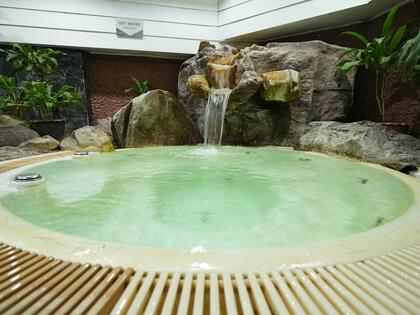
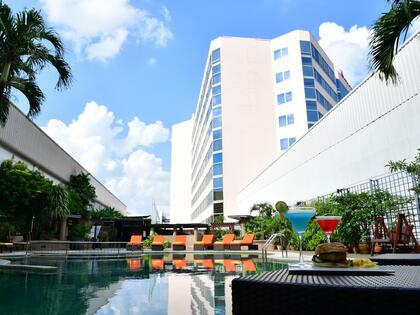
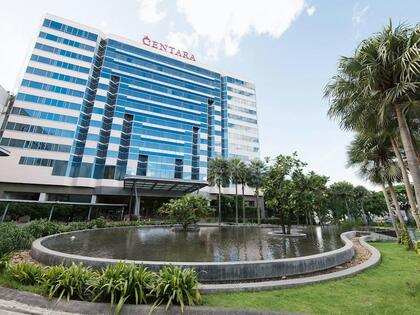
Udon Thani makes a natural base for the journey. Centara Udon, just steps from Central Plaza in the heart of the city, is well placed for a morning departure to the museum before the day warms up. Back in the city by afternoon, there is time for a swim, a relaxing treatment at SPA Cenvaree, or a stroll to the nearby night markets as evening falls.
For travelers with more time, Ban Chiang pairs beautifully with Udon’s other ancient treasure, Phu Phrabat Historical Park, on the western side of the province. Together, they reveal just how deep the roots of Isan run.
A story still unfolding
There is something humbling about standing at the edge of the burial pit at Wat Pho Si Nai, looking down at the remains of people who farmed in these same fields thousands of years ago. Ban Chiang reminds us that history isn’t always found in grand temples or royal cities. Sometimes it lies quietly beneath a village path, waiting for someone to stumble upon it.
Share-
-
-
URL copied to your clipboard